Replay: 'Mohenjo Daro' And A.R. Rahman's Sound For A City Nobody Has Heard
The 2016 film sank, but its soundtrack has quietly found a following. 'Tu Hai' has done the heavy lifting, and the instrumentals turn out to be the best thing on it.
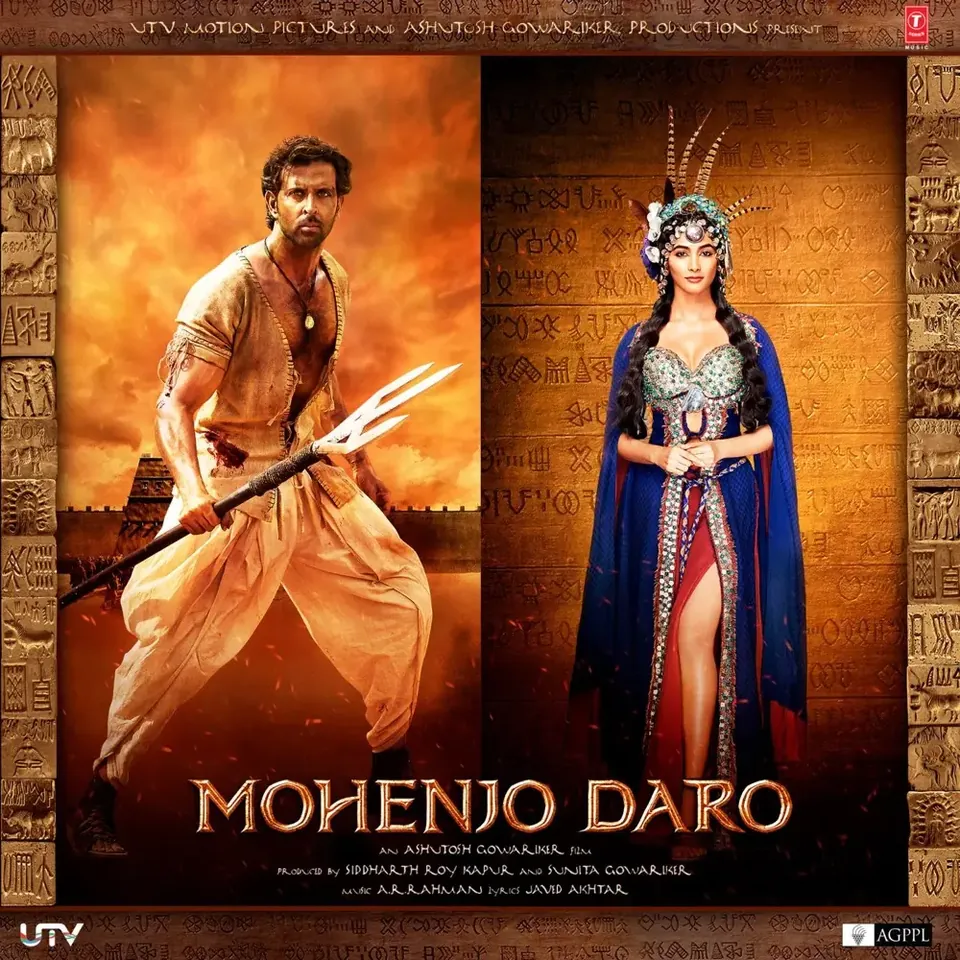
What did the Indus Valley sound like? Nobody knows, which was both the problem and the freedom A.R. Rahman had on Mohenjo Daro. It was his fourth film with Ashutosh Gowariker after Lagaan, Swades and Jodhaa Akbar. Rahman has said he expected something like a dry historical documentary until Gowariker showed him the pictures, and after that he tried to "unearth" the place with his imagination. Javed Akhtar wrote the lyrics, his second film with the pair after Jodhaa Akbar. T-Series paid a reported Rs 15 crore for the music rights and released the eight-track album on 6 July 2016.
The film, starring Hrithik Roshan and Pooja Hegde, didn't connect. The music has had a longer life, especially among listeners who go looking for Rahman's less obvious work.
'Tu Hai'
Rahman sings this one himself with Sanah Moidutty, and it became the album's runaway, the one song that escaped the film's reputation entirely. It's a hushed, unhurried duet that sounds closer to a lullaby than a period love song. Moidutty has said Rahman pushed her out of her comfort zone on it. The video was mocked on release, which hasn't stopped the song turning up on listeners' lists of underrated Rahman a decade later. A version later appeared on MTV Unplugged. Rahman's own voice is not conventionally pretty, and he has never pretended otherwise. Here that slight roughness is the point, the sound of someone singing to one person in a quiet room, and the melody is strong enough that it returns twice more on the album, in the instrumental and in 'Sindhu Ma'.
'Sarsariya'
Shashwat Singh and Shashaa Tirupati get the album's most buoyant song, with Tirupati stretching across her range over tribal percussion and chant. It topped national charts on release alongside "Tu Hai", and it still shows up at college fests where nobody has seen the film. When the album comes up in online threads, it's usually the first song people bring up. Tirupati sounds as though she is having the time of her life. It's also the one that makes the made-up language work, because the rhythm sells the words before you start parsing them.
'The Shimmer Of Sindhu'
This is the instrumental reading of the "Tu Hai" melody, and it might be the best four minutes on the album. Rahman steps back and hands it to Keba Jeremiah's guitar and Kareem Kamalakar's flute, and the two of them breathe around the tune without hurrying it. Hardly anyone talks about it, which is a shame, because it is the clearest view of how good the tune underneath everything is.
'Whispers Of The Mind' And 'Whispers Of The Heart'
Arjun Chandy leads a vocal group through two chant-based pieces, layering human rhythm over ambient sounds of crickets and running water. They're closer to score than song, the sort of thing you'd expect to hear under a scene rather than on a playlist, and they're where Rahman's invented antiquity is most convincing: there are no lyrics to date them, just voices and space.
'Mohenjo Mohenjo'
The opening song is the grandest: Arijit Singh, Bela Shende, Moidutty and Rahman over a large choral and orchestral bed. The chorus work is thrilling, and the brass and voices build like a city going up. Akhtar's mix of formal Hindi and invented "tribal" phrases asks Singh to sing a language nobody speaks, and once or twice you can hear him reaching for it, but the sweep carries him. It never caught on like the two hits, and it remains the track that best explains what the film was trying to be.
(Source: official soundtrack credits, T-Series release)